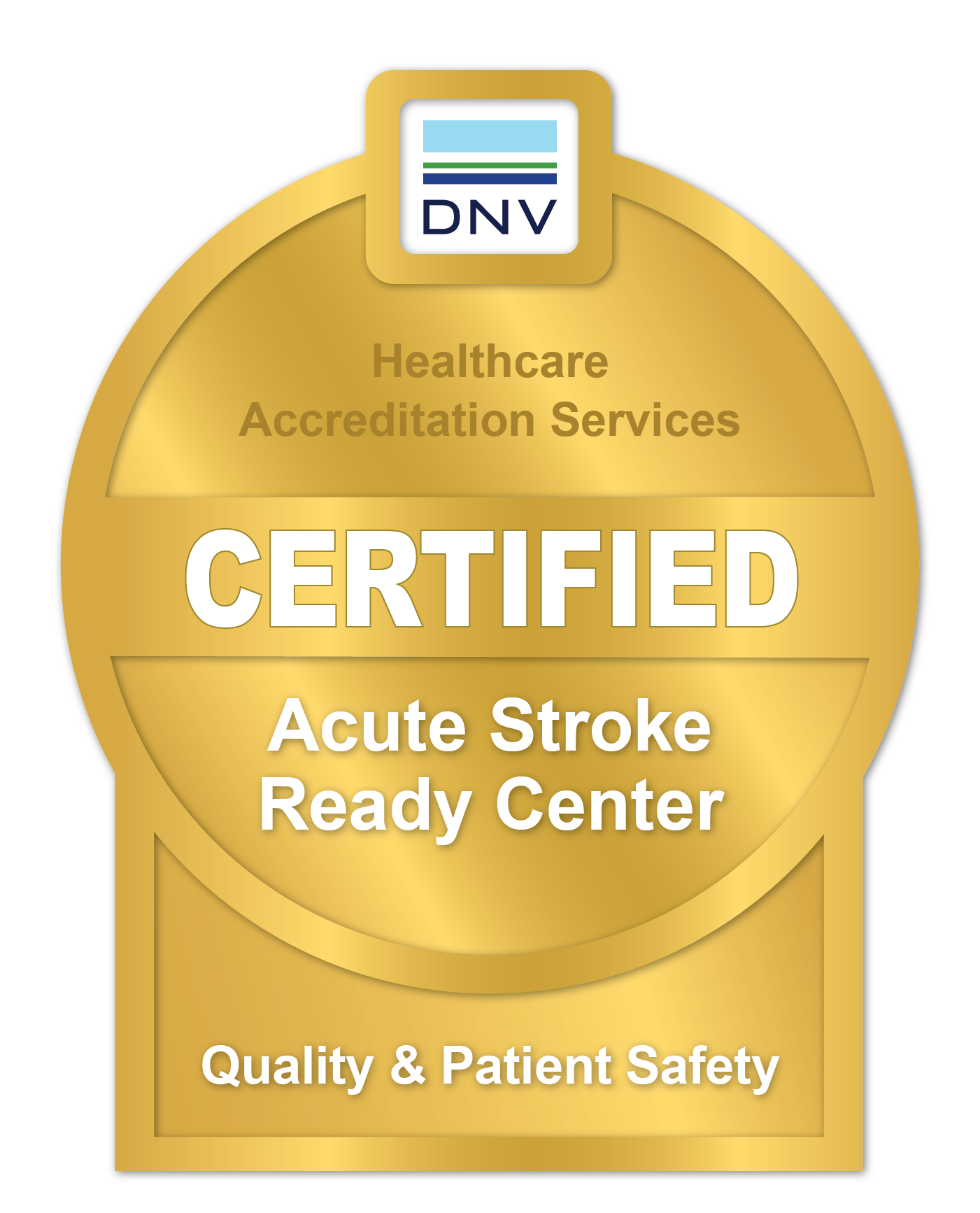
PULLMAN, WA–Pullman Regional Hospital has earned Acute Stroke Ready recertification from DNV, an international accrediting body for healthcare organizations, for the fifth consecutive year. To earn and maintain certification, a hospital must meet or exceed evidence-based standards set by the American Heart Association/American Stroke Association, the Brain Attack Coalition, and the Centers for Medicare and Medicaid Services (CMS) Conditions of Participation.
In 2025, Pullman Regional Hospital cared for 59 stroke patients, a 59% increase from the previous year, including 34 ischemic strokes, 7 hemorrhagic strokes, and 18 transient ischemic attacks (TIAs). Pullman Regional's exceptional stroke response metrics surpassed national benchmarks set by DNV. In acute patient cases, the Door-to-ED Provider time averaged just 6.6 minutes, well below the 10-minute goal. The hospital also excelled in specialized coordination, with the Door-to-Calling Stroke Team averaging only 7.5 minutes, well below the 15-minute target. Additionally, the time from Lab Order to Results averaged 34 minutes, significantly faster than the 45-minute benchmark.
"It's all about time when responding to a stroke," says Stephanie Knewbow, Emergency Department Director and Stroke Coordinator for Pullman Regional Hospital, noting that although stroke patients account for about 1% of ER visits, a specialized team of eight, including physicians, pharmacists, and CT technologists, responds immediately to every "Code Stroke" activation. "The saying goes, 'Time is Brain,'" says Knewbow. "This certification means we're able to assess our patients, connect with a specialist, administer clot-busting medications when prescribed, and stabilize or transfer our patients all within specific, critical windows of time."
"We are seeing a steady increase in stroke cases, and our team is more prepared than ever to meet that need right here in our community," said Verna Yockey, Director of the Intensive Care Unit and Medical-Surgical Unit and member of the Pullman Regional Hospital Stroke Team. "Because we can now treat more patients locally rather than transferring them elsewhere, we're able to save critical time. Our 'Code Stroke' protocol allows us to alert the entire team instantly so that treatment starts without a second of delay."
Pullman Regional Hospital has reached these milestones by focusing on staff education, attending the international stroke conference and bringing back key updates, adding a stroke-specific learning station to the hospital's annual employee Skills Fair, hiring a dedicated nurse educator, and hosting several public education events. This commitment to education, combined with close coordination between the Imaging and Therapy departments and partners at Life Flight Network, ensures that every patient receives the best possible care. These combined efforts have earned the program the Get With The Guidelines® (GWTG) Silver Award. This national honor recognizes Pullman Regional for meeting high standards in stroke treatment and patient recovery.
"For our patients, this means consistently exceeding benchmarks for rapid, accurate, and safe care,” said Tammy Needham, Chief Nursing Officer at Pullman Regional Hospital. “We prioritize speed, because in stroke and cardiac events, every second is vital to saving brain and heart muscle."
"Ultimately, our program is successful because of Dr. Aaron Scott, Emergency Medicine Physician and Stroke Medical Director, and a dynamic team that is committed to continuous improvement," says Knewbow. "The stroke program at Pullman Regional Hospital continues to transform and improve year after year, ensuring we are always ready to provide the best possible care for our community."
Recognize the symptoms of stroke with BE FAST:
B = Balance – Is there a sudden loss of balance or coordination?
E = Eyes – Is there sudden blurred, double, or loss of vision?
F = Face Drooping – Does one side of the face droop or feel numb? Ask the person to smile. Is the smile uneven?
A = Arm Weakness – Is one arm weak or numb? Ask the person to raise both arms. Does one arm drift downward?
S = Speech Difficulty – Is speech slurred or hard to understand?
T = Time to call 911 – If any of these symptoms are present, call 911 immediately.
"Our community is doing everything right by seeking care when they suspect a stroke," Knewbow said. “We know we're seeing more stroke patients and initiating more code strokes because people are recognizing the signs of a stroke and calling 911 or getting to the hospital. This is exactly what they should be doing."
Media Contact:
Alison Weigley, Strategic Planning & Business Development Director
Public Information Officer
Pullman Regional Hospital
Office: (509) 332-2041 / Cell: (509) 330-0242
alison.weigley@pullmanregional.org