The holidays are full of food, festivity, and, for families managing allergies, a fair amount of stress. From candy swaps on Halloween to hidden ingredients at the Thanksgiving table to the surprising culprits behind holiday sneezing, each season brings its own set of challenges.
The good news is that a little planning can make all the difference. Dr. Kerry Drain, a board-certified allergist and immunologist at Pullman Regional Allergy & Immunology, shares practical tips for staying safe from Halloween through Christmas.
Halloween’s Safer Trick-or-Treating
For parents of kids with food allergies, Halloween can be especially nerve-wracking. Dr. Drain offers two key rules: first, no eating along the trick-or-treat trail. “You have to make sure that you know what your kid is eating,” she cautions. Second, always carry an EpiPen. Keep it in the bag or with a parent, not in the car. “If something happens, you don’t want to wonder where your car is.”
Dr. Drain also points out a hidden danger. Mini or fun-size candies are sometimes made on different production lines than their full-size versions. That means a candy you trust may not be safe in its smaller form. “Just because the full-size candy is safe doesn’t necessarily mean that the mini or the fun size candy is safe,” she warns. One solution is to swap allergenic candies for a full-size version you know is safe. Most kids happily make that trade.
The Teal Pumpkin Project
Dr. Drain is also a fan of the Teal Pumpkin Project. A teal pumpkin outside a home signals that non-food treats are available, like glow sticks, stickers, or small toys. “It’s a wonderful way of normalizing trick-or-treating for kids who have different allergens,” she offers. One suggestion Dr. Drain advises is talking with your neighborhood about taking part, which removes the stress of checking every label at the door.
Thanksgiving: Hidden Allergens
Thanksgiving revolves around food, and stuffing is the number one culprit for accidental exposures. “People just assume that it’s going to be safe,” states Dr. Drain, “but creative cooks often add nuts like walnuts or chestnuts.” Wheat, gluten, eggs, and dairy can also hide in casseroles or in butter brushed over the turkey.
Communication is the best defense. Let your host know your needs ahead of time, since cross-contamination is easy in a busy kitchen. Dr. Drain also suggests offering to bring your own dishes to ease the pressure. When asking about ingredients, she recommends framing it with appreciation: “Everything looks fabulous. But, because of my allergy, could you please let me know what’s in this dish so we can all enjoy this dinner safely?”
Christmas Trees and “Christmas Tree Syndrome”
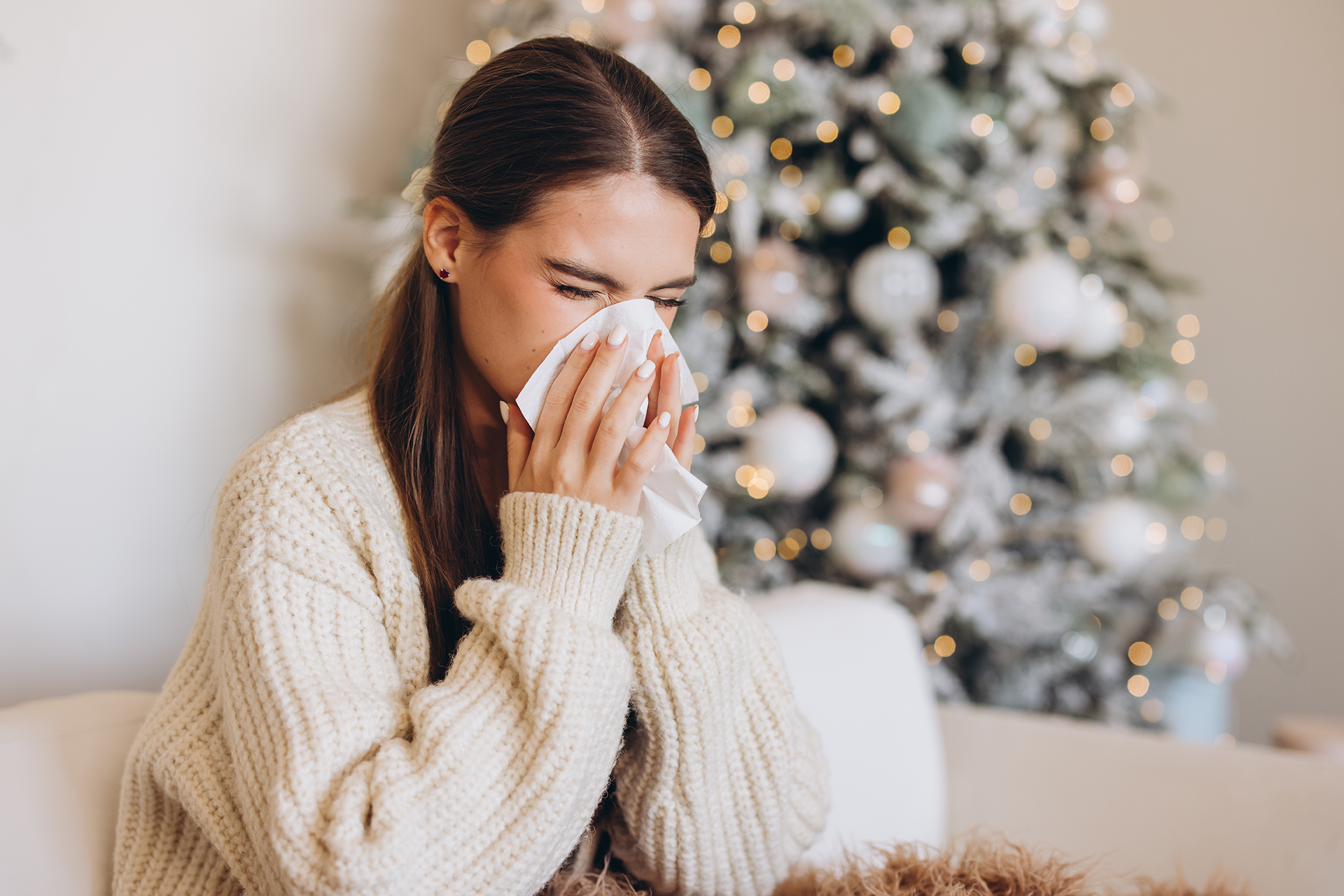
Many people blame their holiday sneezing on a pine allergy. In fact, true pine allergies are rare. “The pollen itself is huge, and it’s really hard to get into the respiratory lining,” explains Dr. Drain. The real culprit is usually mold. Trees grow outside, where mold is present. Once brought into a warm home and watered, those molds can become airborne and trigger symptoms.
You cannot remove all the mold, but you can reduce it. Dr. Drain suggests hosing down a real tree with warm water outside, then letting it dry in the garage or on the porch before bringing it in. Some tree lots even have mechanical shakers that help.
Are Artificial Trees Safer?
Are artificial trees better than the “real” thing? Not necessarily. Artificial trees collect dust, especially when stored in basements, attics, or garages. Dr. Drain recommends wiping down the branches with a damp microfiber cloth, or even vacuuming them, before decorating.
After the season, store the tree in a sealed plastic bag rather than a porous cardboard box. For either type of tree, a HEPA air purifier in the room can help capture lingering allergens. The same sealing tip applies to delicate ornaments.
Key Takeaways for the Season
Dr. Drain’s holiday advice comes down to a few simple points:
-
Remember that many Halloween candies may not be as safe as they seem
-
Set clear rules and always carry an EpiPen
-
Communicate early with hosts about ingredients and cross-contamination
-
Wash live trees or wipe down artificial ones before bringing them indoors
A little preparation, Dr. Drain says, goes a long way toward a lower-stress, more enjoyable holiday for everyone.
Click here to learn more about Pullman Regional Allergy & Immunology.