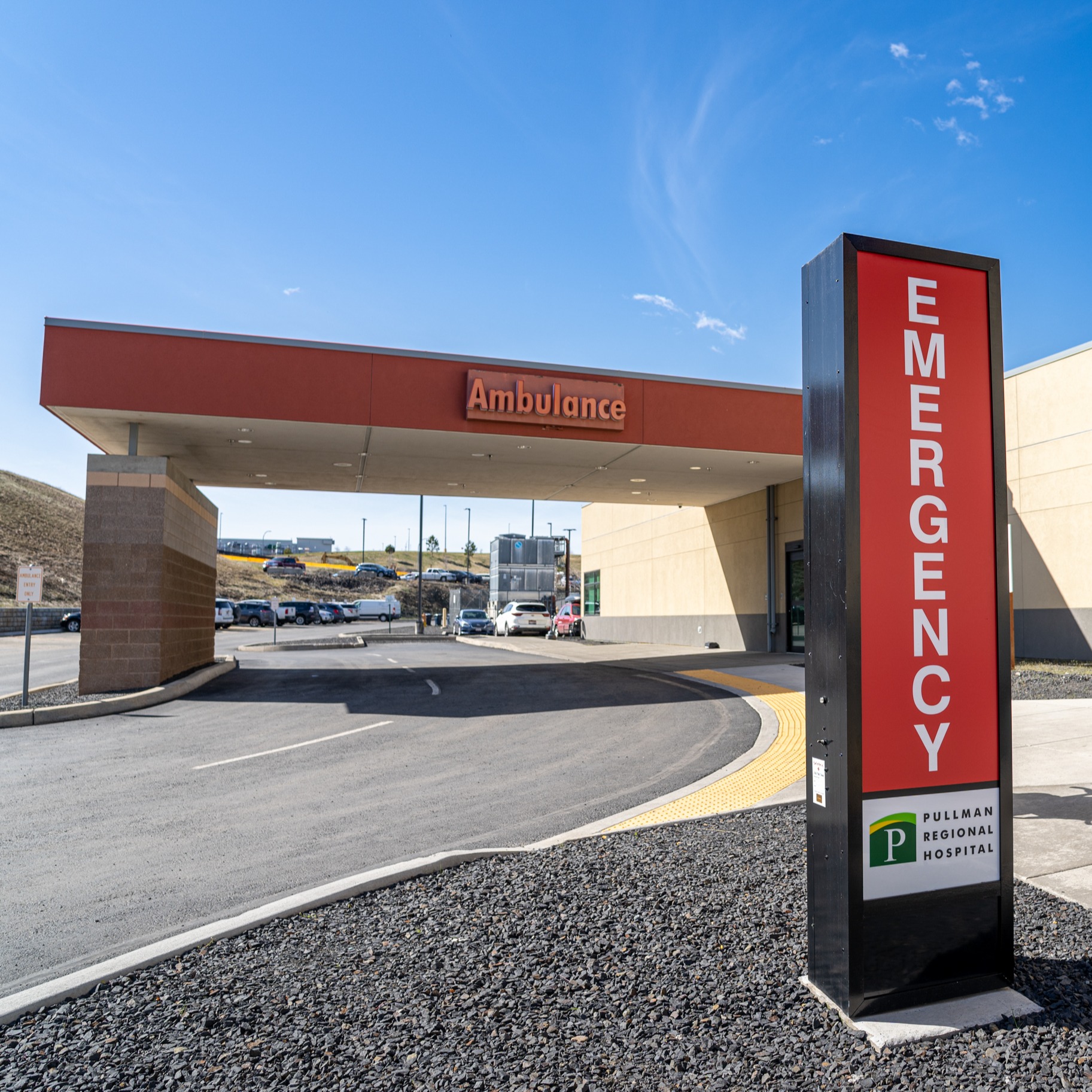
Stroke is the fifth leading cause of death in the United States and the single leading cause of long-term disability. At Pullman Regional Hospital, a dedicated team works around the clock to make sure that when stroke strikes, help is quickly on the way. In this article, Dr. Aaron Scott, emergency physician; Kim Johnson, registered nurse; and Stephanie Knewbow, Emergency and Clinical Support Services Director, share what everyone should know about stroke care at Pullman Regional Hospital.
Recognizing the Signs of Stroke
A stroke occurs when blood flow to the brain is suddenly interrupted—most often by a blockage, and less commonly by bleeding. Every part of the brain that goes without blood begins to die. Symptoms can range from subtle to severe.
Dr. Scott recommends remembering the “BE FAST” acronym for recognizing symptoms of a stroke:
- B is for balance issues
- E is for eyesight changes
-
F is for face drooping
-
A is for arm weakness
-
S is for speech difficulty
-
T is for time
“Think of a stroke whenever there's a sudden onset of weakness, numbness, or difficulty speaking," he advises. “And then, call 911 immediately.”
Dr. Scott notes that strokes are usually painless, which is one reason people sometimes do not recognize them right away. “Many times, people don't recognize these symptoms in themselves,” he cautions. “It's up to friends and family to notice something is off.”
Why Every Second Counts
The phrase used in stroke care is "time is brain,” and it is literal. “Every second that goes by that a portion of the brain is not getting perfused, it's causing brain death, cellular death,” Johnson explains. “Each minute that passes, the patient is losing brain function and years of their life.”
The window for treatment is narrow. “Under most circumstances, we have only four and a half hours from the onset of symptoms to administer brain-saving medications,” Dr. Scott notes. “It's even more urgent than heart attacks.”
The Code Stroke Response
When a potential stroke patient arrives at Pullman Regional, a single button press initiates all of the next steps. “It sets a group of people into motion,” Johnson shares.
About 11 staff members respond immediately, including nurses, the emergency physician, lab, CT, respiratory therapy, and pharmacy. Getting a CT scan quickly is critical, as its results determine whether a patient is eligible for clot-busting medication or a procedure to remove the clot entirely.
Stroke-Ready in a Rural Community
Pullman Regional has earned its fifth straight “Acute Stroke-Ready” recertification. This is a distinction that signals the hospital is equipped to immediately evaluate, stabilize, and treat stroke symptoms. For a rural facility, that matters enormously.
“We want our community to receive good stroke care even though we live in a rural area,” Knewbow emphasizes. Building that program took years of collaboration, staff education, and continuous improvement. “Seeing the teamwork during a stroke activation and knowing that faster care can directly impact someone's outcome is incredibly rewarding,” she adds.
Johnson points to the team itself as the program's greatest asset. “Employee engagement would be the number one factor in making a great stroke program,” she shares. “We're really passionate about delivering high-quality care.”
The Bottom Line
Dr. Scott's message to the community is clear. Getting timely stroke care can mean the difference between returning home and requiring long-term care. “More people can return to independent living if they get timely stroke care,” he reinforces.
If you or someone near you shows signs of a stroke, do not wait. Call 911. For more information, visit our Emergency Care webpage.